“Tropical Fruit” search results (2000)

Introduction to the flavor and taste of Brazilian coffee brand Brazilian coffee
The largest coffee producer, which accounts for 1/3 of the world's coffee consumption, accounts for 1/3 of the world's coffee consumption and has a place in the global coffee market, although Brazil faces several times more natural disasters than other regions. but its acreage is enough to make up for it. Brazilian coffee fruit there are many kinds of coffee here, but its industrial policy is large and cheap.
2016-07-27 Brazil coffee characteristics brand flavor taste introduction this big
Introduction of Rose Summer Coffee in Emerald Manor in Panamanian Coffee producing area
The fragrance of flowers, tropical fruits, strong sweetness; these are the feelings that Rose Summer has always given us. Properly baked, they make you feel like sipping the fragrance of a bouquet of flowers. Maybe you don't know the story of Rosa, an ancient native species from Ethiopia that was brought into a coffee experimental garden in Costa Rica as a coffee sample.
2016-06-27 Panama Coffee producing areas Emerald Manor Rose Summer introduction Flowers Tropical fruits
Grapefruit aroma of Tanzanian Coffee grindability characteristics Variety Baking record Price in Manor producing area
The eastern coastal areas and inland lowlands of Tanzania have a savanna climate, while the western inland plateau has a tropical mountain climate, with an average temperature of 21-25 ℃ in most areas. More than 20 islands in Zanzibar have a tropical maritime climate, which is hot and humid all the year round. The annual average temperature of 26 ℃ is divided into bimodal distribution and unimodal distribution. Areas with double bee distribution of rainfall include Victoria
2016-10-10 Grapefruit aroma Tanzania Coffee Grinding characteristics Variety Baking recording Zhuang
Introduction to the flavor, characteristics, taste and manor of Rwandan coffee with tropical climate characteristics
Since the 1920s, Arabica coffee grown in Rwanda has been famous for its unique fruit sweetness and rich grass aroma. In recent years, the Rwandan government has taken positive measures to vigorously promote coffee production, set up coffee production cooperatives in various places, and give technical guidance and financial support to farmers, so that coffee production has made considerable progress. University of Rwanda
2016-08-30 Tropical climate characteristics Rwanda coffee flavor taste manor introduction last
Tippi Katim Coffee Flavor description characteristics of Grinding degree introduction of high-quality coffee beans in producing areas
Baoshan Lujiangba belongs to the south subtropical, northern tropical and semi-dry tropical climate, which is very suitable for the growth of small-grain coffee. The small-grain coffee grown here has the characteristics of excellent quality, fast growth, early fruit and high yield. most of the nutrients are close to or higher than those of foreign products, and the contents of crude fiber and sugar are higher than those of foreign products. As early as 1958, the international coffee tasting was held in London, England.
2016-10-13 Tin Kaka Tim Coffee Flavor description Grinding characteristics varieties producing areas
Coffee beans Coffee
There are about 60 species of coffee in the world, of which only 25 species are cultivated to make coffee, of which only 4 species are used as commercial coffee: large fruit coffee (Coffea liberica), medium fruit coffee (Coffea canephora), small fruit coffee (Coffea arabica) and high yield coffee (Coffea dewevrei). These are botanical names. Coffee in the world at present
2014-09-25 Coffee beans coffee family.
Introduction of coffee producing areas in Rwanda
The characteristics of Rwandan coffee: the taste of Rwandan coffee is described as grass aroma, with tropical climate characteristics, this coffee presents a sweet fruit taste, it also makes people taste refreshing, clear, and fresh. Bourbon coffee grown in Rwanda is amazing for its sweet fruit, full-bodied, unrestrained and lingering aftertaste.
2016-06-14 Rwanda coffee producing areas introduction characteristics taste description green
Introduction to the flavor and taste characteristics of Esmeralda Manor in Panama with fruit flavor
Panama is located in the isthmus of Panama in Central America, bordered by Colombia to the east, the Pacific Ocean to the south, the map of Panama to Costa Rica to the west and the Caribbean Sea to the north. The territory is S-shaped to connect North and South America, and the Panama Canal connects the Atlantic and Pacific oceans from north to south. It is known as the bridge of the world. [5] Panama has a land area of 75517 square kilometers.
2016-08-23 Fruit Flavor Panama Ace Meera Manor producing area Taste characteristics introduction
The soft flavor of Brazilian coffee introduces the taste of Brazilian coffee producing area.
The largest coffee producer, which accounts for 1/3 of the world's coffee consumption, accounts for 1/3 of the world's coffee consumption and has a place in the global coffee market, although Brazil faces several times more natural disasters than other regions. but its acreage is enough to make up for it. Brazilian coffee fruit there are many kinds of coffee here, but its industrial policy is large and cheap.
2016-07-27 Aroma soft Brazilian coffee flavor introduction production area taste this big
A brief discussion on the knowledge of Coffee beans Encyclopedia
1. Summary: coffee is a perennial evergreen shrub or small tree of Rubiaceae. It is native to tropical Africa and has been cultivated for more than 2000 years. The Arabs began to grow coffee in 525 BC, and it was popular for Arabs to stir-fry coffee beans. They began to grow coffee beans on a large scale after the 15th century, and were widely distributed in the tropics and subtropics of Europe, Asia, Africa and Latin America after the 18th century.
2014-11-12 Coffee knowledge boutique coffee science coffee beans coffee encyclopedia
Coffee beans are important raw materials for making beverages
1. Summary: coffee is a perennial evergreen shrub or small tree of Rubiaceae. It is native to tropical Africa and has been cultivated for more than 2000 years. The Arabs began to grow coffee in 525 BC, and it was popular for Arabs to stir-fry coffee beans. They began to grow coffee beans on a large scale after the 15th century, and were widely distributed in the tropics and subtropics of Europe, Asia, Africa and Latin America after the 18th century.
2015-09-22 Talking about coffee beans production beverages important raw materials overview coffee grass for many years
Introduction to the planting environment price variety producing area of Ecuadorian coffee grindability treatment
Guatemala is located in the tropics, the northern and eastern coastal plains have a tropical rain forest climate, the southern mountains have a subtropical climate, the year is divided into two dry and wet seasons, with the wet season from May to October and the dry season from November to April of the following year. The narrow and fertile flatlands on the Pacific side of Guatemala have a tropical climate. The central plateau is also the cultural center of Guatemala, where the year-round temperature ranges from 1300 to 1800 meters.
2016-10-15 Ecuador coffee grinding treatment planting environment price variety producing area mouth
Smooth and soft Tanzania Coffee Flavor description characteristics of Grinding degree introduction of varieties in producing areas
The eastern coastal areas and inland lowlands of Tanzania have a savanna climate, while the western inland plateau has a tropical mountain climate, with an average temperature of 21-25 ℃ in most areas. More than 20 islands in Zanzibar have a tropical maritime climate, which is hot and humid all the year round. The annual average temperature of 26 ℃ is divided into bimodal distribution and unimodal distribution. Areas with double bee distribution of rainfall include Victoria
2016-10-11 Smooth soft Tanzania coffee flavor description grinding characteristics variety production
A family of coffee beans
There are about 60 species of coffee in the world, of which only 25 species are cultivated to make coffee, of which only 4 species are used as commercial coffee: large fruit coffee (Coffea liberica), medium fruit coffee (Coffea canephora), small fruit coffee (Coffea arabica) and high yield coffee (Coffea dewevrei). These are botanical names. Coffee in the world at present
2014-07-02 Coffee beans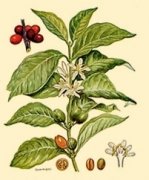
A family of coffee beans
There are about 60 species of coffee in the world, of which only 25 species are cultivated to make coffee, of which only 4 species are used as commercial coffee: large fruit coffee (Coffea liberica), medium fruit coffee (Coffea canephora), small fruit coffee (Coffea arabica) and high yield coffee (Coffea dewevrei). These are botanical names. Coffee in the world at present
2014-07-02 Coffee beans
Introduction to Rwanda Coffee beans of "Grass aroma"
The characteristics of Rwandan coffee: the taste of Rwandan coffee is described as having a tropical climate. In addition to the sweetness of fruit, this coffee also gives people a feeling of freshness, clarity, and freshness. Bourbon coffee grown in Rwanda is amazing for its sweet fruit, full-bodied, unrestrained and lingering aftertaste. This
2016-06-18 Grass aroma Rwanda coffee beans introduction coffee characteristics taste description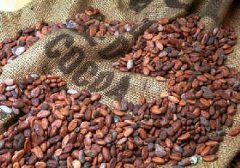
Brazilian coffee bean boutique coffee common sense
Brazilian coffee beans include all coffee beans grown in Brazil. Except for Sanduo, Brazilian beans are mostly cheap and good coffee. Can be used for mass production of comprehensive coffee beans, most of which are re-roasted. The main raw material of instant coffee is also Brazilian coffee beans. When the coffee bean germ is very fresh, it is artificially refined and naturally dried in the vulva for about 60-70 days to make the fruit
2015-04-13 Brazil coffee beans boutique coffee common sense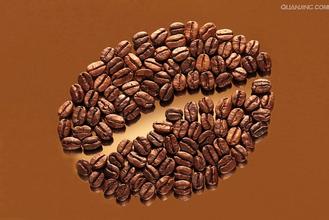
Flavor and taste characteristics of Honduran coffee beans in America introduction to the characteristics of Shirley Coffee Bean barrel treatment
Honduras is located in the north of Central America, facing the Caribbean Sea to the north, the Gulf of Fonseca in the Pacific Ocean to the south, Nicaragua and El Salvador to the east and south, and Guatemala to the west, mostly mountains and plateaus. It has a tropical climate, mild temperature and abundant rainfall, so it is an ideal place for coffee growth. Two kinds of quality produced in Honduras
2023-03-18 Honduras flavor taste characteristics located in Central America North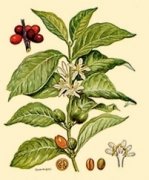
The basic concept of coffee beans
There are more than 60 species of coffee plants in the world, only 25 species are cultivated for coffee production, of which only 4 species are used as commercial coffee: Coffee liberica, Coffee canephora, Coffee arabica and Coffee deweverei, which are botanical scientific names. Coffee in the world today.
2014-11-12 coffee knowledge specialty coffee coffee base coffee beans
Nicaraguan coffee plantation, Nicaraguan coffee growing environment, Nicaraguan coffee.
Nicaragua, located in the middle of Central America, is the largest country in China and the United States, bordering Honduras in the north, Costa Rica in the south, the Caribbean Sea in the east and the Pacific Ocean in the west. The eastern part is the coastal plain, the high temperature and rainy climate belongs to the tropical maritime climate, and the western part is the coastal lowland with more active volcanoes. The north-central part is a highland, with an average annual temperature of 18 ℃ and an annual precipitation of 1500-2500mm.
2016-03-01 Nicaragua Coffee planting Manor growth Environment located in Central America